
A Carbon Fiber Tribute to the XLCR Legacy
The Harley-Davidson RMCR cafe racer isn’t a production bike. Not yet.
It’s a concept. A design exercise built around the 1250cc Revolution Max motor. But it feels bigger than that. It feels like Harley-Davidson looking back at one of its boldest swings, the 1977 XLCR, and asking how far that rebellious streak can stretch in 2026.
And the answer, apparently, is carbon fiber.
A Modern Take on the XLCR


The original XLCR was Willie G. Davidson’s café racer experiment.
“It’s a modern interpretation of a rebellious original, and a tribute to Willie G., whose influence still guides how we design today.”
That’s a bold statement. And it feels accurate. The RMCR doesn’t copy the XLCR. It channels the attitude.
Blacked-out, narrow, and unapologetically different from the chrome-heavy Harleys of its time. It didn’t sell well, but history has been kind to it. Today, it’s one of the most collectible Sportsters ever built.
The Harley-Davidson RMCR cafe racer taps directly into that lineage.
Low clip-ons. Solo tail. Fairing that hugs the headlight. A stance that feels more track day than Main Street. But instead of an ironhead motor and spoked wheels, this one is wrapped tight around the Revolution Max 1250 platform.
And that changes everything.
Revolution Max, Reimagined
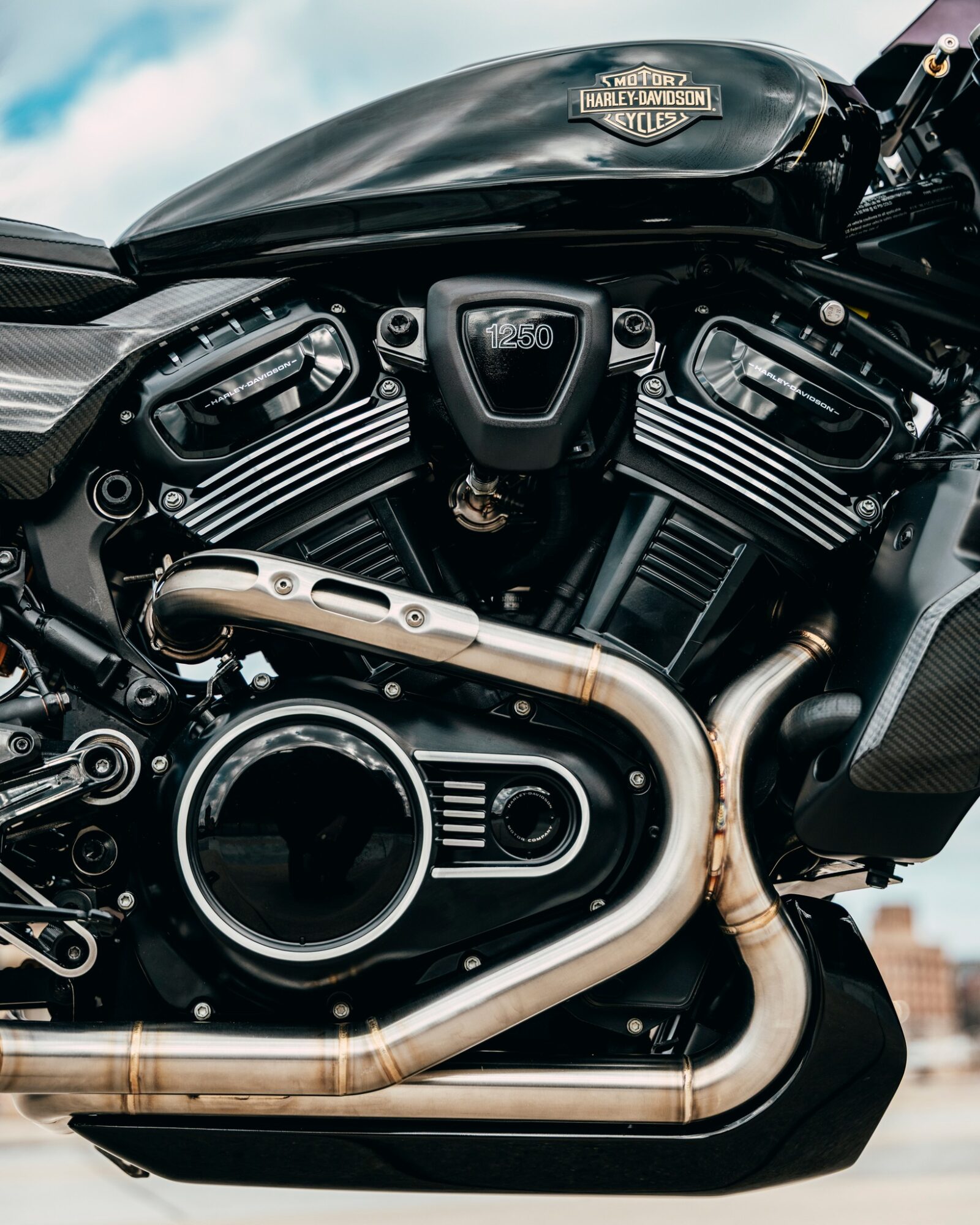

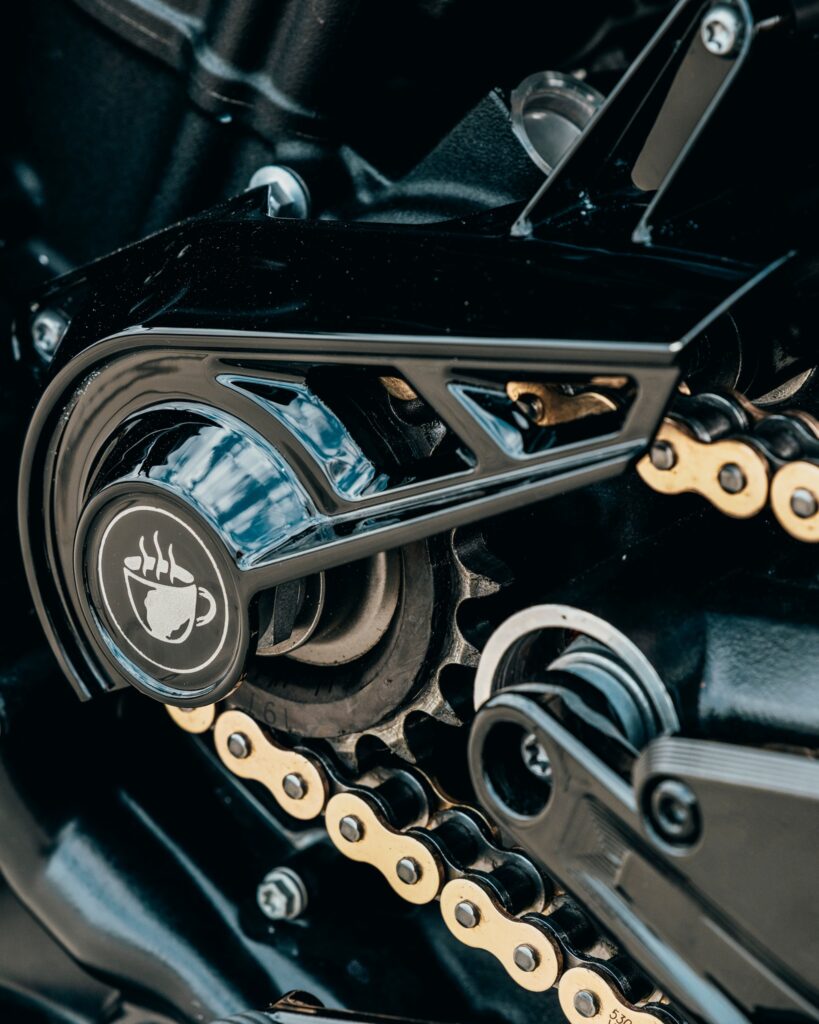
The 1250cc Revolution Max engine was never meant to live a quiet life. It’s compact, high-revving, and structurally integrated into the chassis. In the Pan America and Sportster S, it already proved it could drag Harley-Davidson into a new performance era.
In the Harley-Davidson RMCR cafe racer, that motor finally looks at home in a pure sport silhouette.
The proportions are tighter. The geometry looks aggressive. The twin 2-into-2 exhaust setup feels deliberate and balanced, giving the bike a visual symmetry that most modern Harleys don’t chase.
It doesn’t look like a cruiser trying to play dress-up.
It looks purpose-built.
Carbon Everywhere


The first thing you notice in person or in photos is the carbon fiber.
Fairing. Tank shroud. Tail section. Side panels. Front fender. The weave is visible and intentional, edged with subtle gold striping that nods to the XLCR’s black-and-gold livery.
It’s not loud. It’s restrained. Confident.
The Harley-Davidson RMCR cafe racer feels closer to a boutique European special than anything traditionally associated with Milwaukee. And that’s exactly why it works.
There’s tension in it.
Heritage meets performance platform. American V-twin meets café racer silhouette. Old-school rebellion meets modern materials.
Every Line Feels Intentional

From the cropped tail to the tight fairing opening around the round headlight, this concept avoids unnecessary bulk. Even the cockpit feels pared back, with dual analog-style gauges tucked under a minimal carbon cowl.
The stance is what sells it. The bike sits low and forward, weight biased toward the front wheel. It looks ready to attack a corner rather than idle outside a diner.
And parked next to an older Sportster-based café build, the contrast is sharp. The RMCR isn’t nostalgic. It’s evolutionary.
Should Harley-Davidson Build the RMCR?

That’s the real question.
The Harley-Davidson RMCR cafe racer proves the Revolution Max platform has room to move beyond adventure and muscle cruiser categories. There’s space for a focused, performance-first street bike in the lineup. Something that competes visually and dynamically with modern retros from Europe and Japan.
A limited production run would make sense. Keep it tight. Keep it special. Lean into the XLCR story and the Willie G. connection. Let it exist as a halo bike that shows what Harley-Davidson design can do when it isn’t boxed in.
Because if this is only a concept, it feels like a missed opportunity.
The original XLCR was controversial in its day. The RMCR could be controversial for different reasons. Too sporty. Too modern. Not “traditional” enough.
But that tension is the point.
The Harley-Davidson RMCR cafe racer isn’t about fitting in. It’s about pushing the brand forward while tipping a helmet to the past.
And if Harley-Davidson is serious about evolving its performance identity, this is the kind of risk worth taking.
If this rolled into dealerships tomorrow, would it make sense in the lineup?